
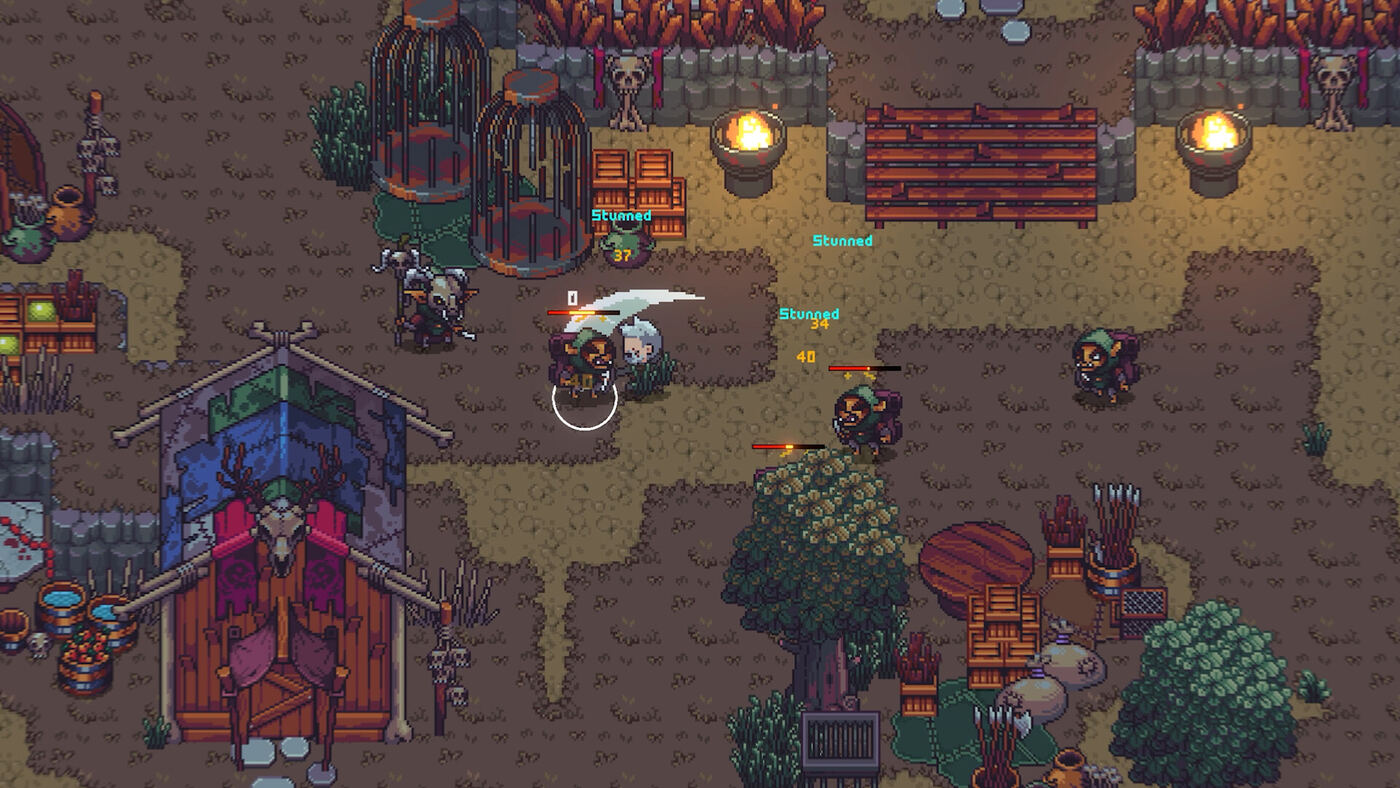
The Vitromotus is the underground prison Emberville takes place in, and it is the reason death in the game is not permanent. It was built as a magical confinement for the unwanted elements of a once great society, and it failed in a way nobody planned: the energy inside it, kymia, brings the imprisoned back from death. Everything strange about the place follows from that.
Early Access opens inside the first major biome of a planned nine. Version 1.0 is meant to hold all nine, and the regions shown so far are not all stone corridors.
What the prison was built to do
The store page describes the Vitromotus as a magical confinement for the unwanted elements of a once great society, one that now stands as a testament to the arrogance and corruption of the people who ordered it built. Those two words carry the backstory in shorthand. A society with the power to wall its undesirables underground does not build a prison as a punishment; it builds one as an erasure, and it assumes the arrangement will hold indefinitely.
It did not. The corruption is not incidental set dressing — it is the reason the place is broken now, and the reason the people inside were never let out. The corridors you fight through are the interior of an institution that outlived the judgement of the people who founded it.
Kymia is why nobody stays dead
Kymia is the setting's central mechanic and its central horror at the same time. It is a power born from emotions, and it returns the dead inside the Vitromotus to life. A prisoner who dies does not leave. A creature that is killed does not stay dead.
That single rule explains the shape of the game:
- Death costs progress, not the character. A wipe sends you back into the corridors rather than to a game-over screen.
- The population is old. Anything down there has had an enormous amount of time to be changed by the place, which is why the deeper rooms are stranger than the entrance.
- The prison cannot be emptied. Killing the inhabitants does not reduce the population, so escape is a problem of navigation and strength rather than attrition.
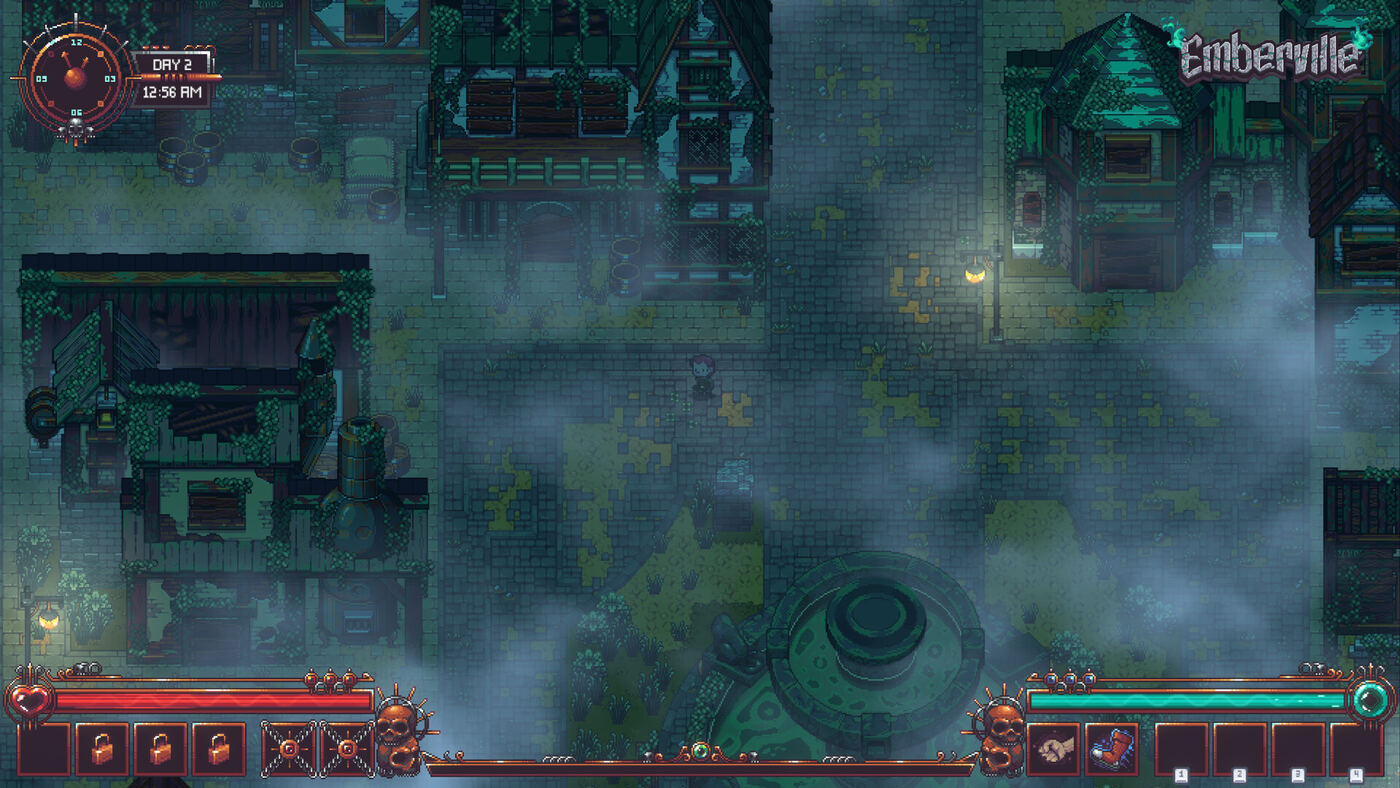
What kymia did to the place
A prison designed for stone and iron has been remade into an ecosystem. Kymia does not merely keep the inmates breathing; it changes what they are, and it changes the ground they stand on.
The results are geographically distinct. Regions inside the Vitromotus have their own ecology, their own light and their own creatures, which is why the game's environments do not read as one dungeon with different wallpaper. A place shaped by emotion rather than geology produces weather, growth and inhabitants that follow no architectural logic.
That also gives the monsters a coherent origin. The creatures are not fauna that wandered in; they are what the prison's energy made out of things that had been dying there for a very long time.
One biome at launch, nine by 1.0
The scope of the Vitromotus is public and specific:
| Point | Detail |
|---|---|
| Early Access | Opens with the first major biome |
| Version 1.0 | Planned to hold nine biomes |
| Between the two | New stories, quests, enemies, equipment, characters and building materials |
Nine regions is a large claim for a prison, and the announcement frames it as the long-term shape of the game rather than a launch promise. The first biome has to carry the whole structure until the second arrives.
The regions shown so far
The environments already on display cover more ground than a single dungeon would suggest:
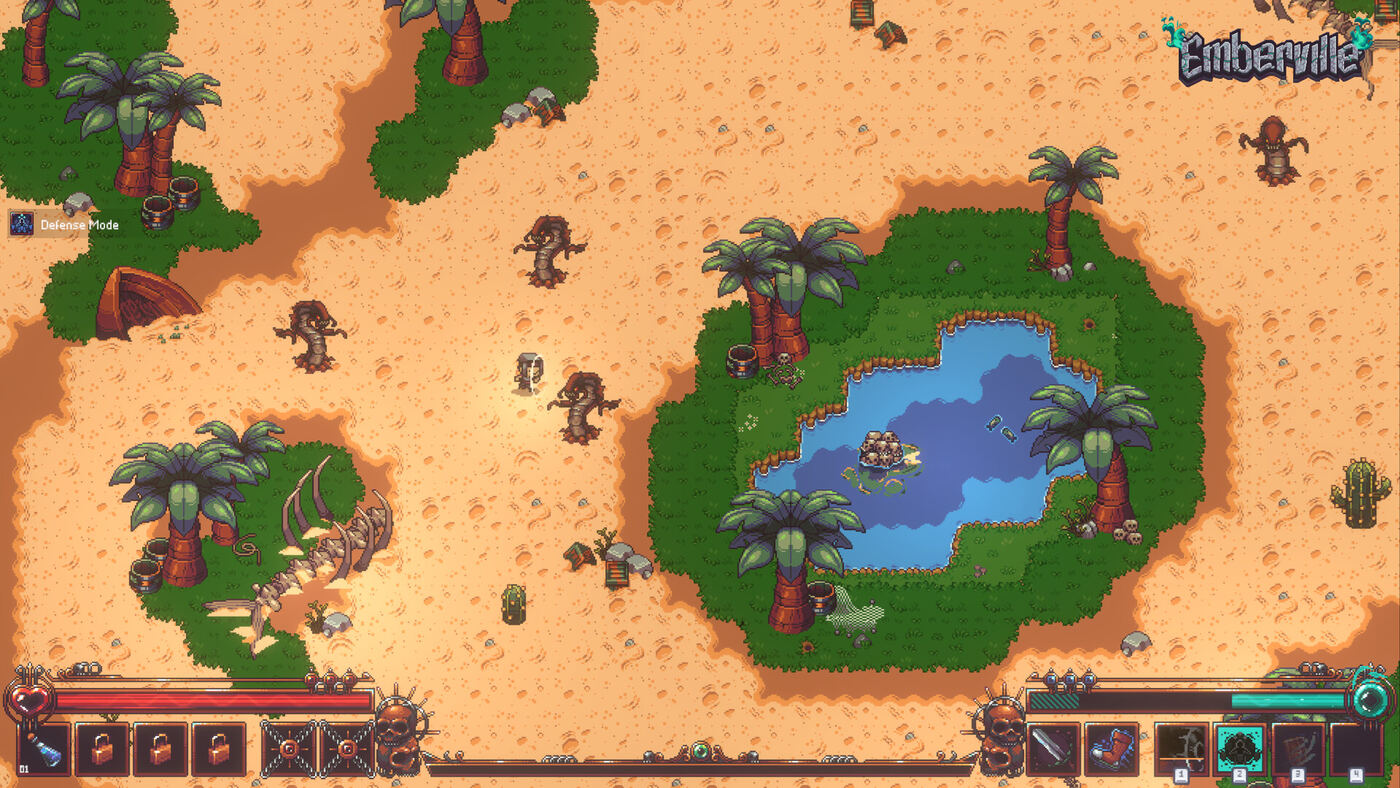
- A desert stretch with oases. Palm trees, standing water and creatures crossing open sand — the widest contrast with the stone interiors.
- A forest road at dusk. Lamps, a pond and tree cover, which is the closest the game gets to an ordinary landscape before it is spoiled.
- A timber region in cyan fog. Walkways and scaffolding running through mist, built rather than carved.
- A dungeon laboratory. Cyan cultivation tanks, metal piping and enemies carrying level numbers over their heads.
The laboratory is the most informative of the four. Cultivation tanks and pipework are fittings for work rather than for holding people, which fits the premise better than a ruin does: the Vitromotus was an institution with staff, not only inmates.
Survivors, and the way back up
Not everyone inside is hostile. Survivors are held in the Vitromotus, and freeing them is the mechanism that populates Emberville above ground. Each rescued resident brings a trade, a quest or a shop, which makes the prison a source of people as well as materials.
That arrangement closes the setting's logic. The prison was built to remove people from a society. The game's loop is the reverse of that act: go down, bring someone back, and give them a place in a town that is being rebuilt on top of the ruins.
Why the name matters
Vitromotus is not a place name in the decorative sense. It is an institution, with a founding decision, a failure and a population — and the game's premise is that the failure is still running. Kymia keeps the doors shut from the inside by never letting anyone leave through death.
That is also why the combat system is built around retreat and re-entry rather than survival. You are not trying to get out of a fight alive; you are trying to get through a place that will not let anyone out at all. What the first build contains, and when it arrives, is covered on the early access page.
Next step
- Emberville Early Access: Nine Biomes, One at LaunchEmberville early access opens January 7, 2027 with the first of nine biomes, five content blocks on day one, and co-op, mods and consoles held for 1.0.
- Emberville Combat: Weapon Combos, Parry Windows, BossesEmberville combat runs on positioning and timing: weapon-bound combo trees, parry and block resolved in real time, and boss fights with their own health bar.
- The delay, step by stepWhy Early Access moved from October 27 to January 7, one day before launch.