
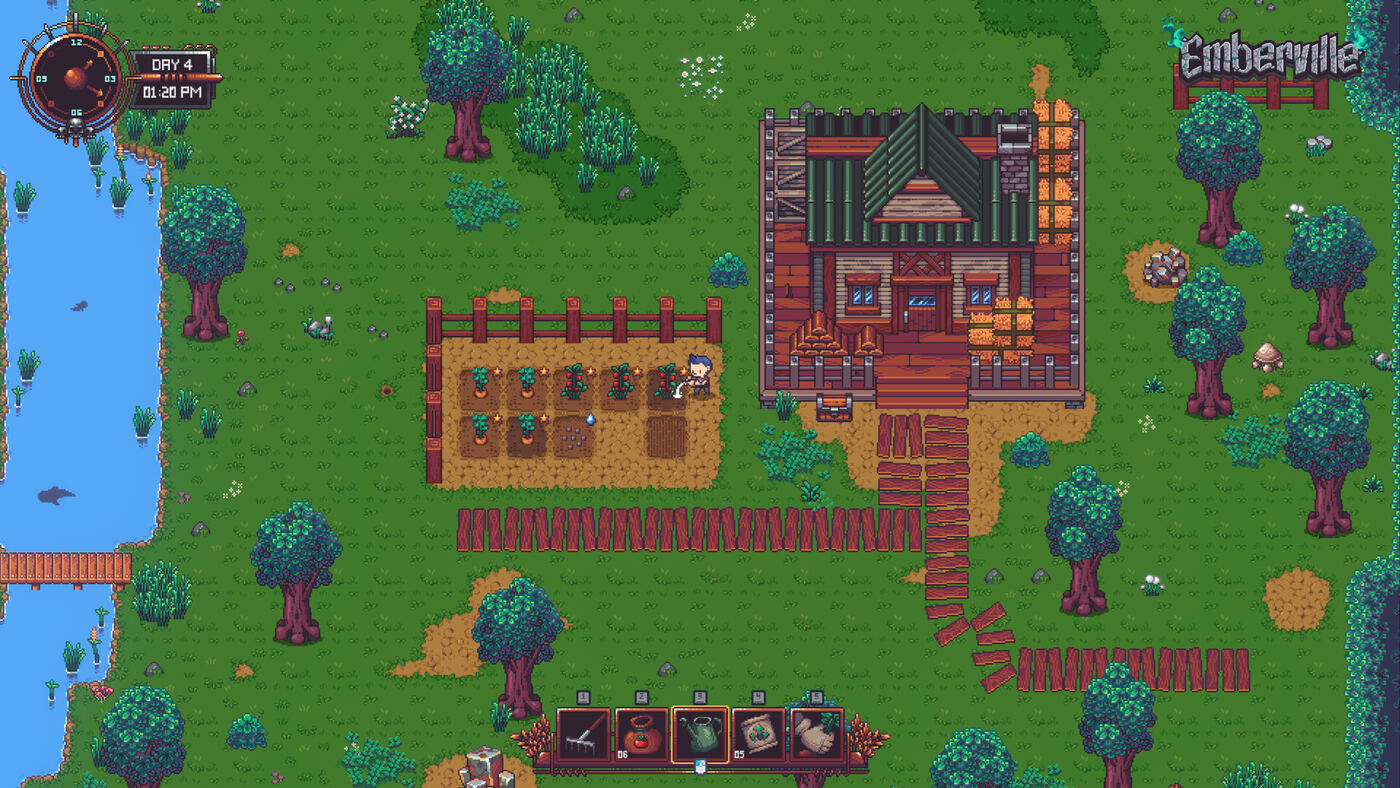
Emberville town rebuilding follows a three-step loop: rescue a survivor, learn what they can teach, and the settlement grows into a hub. The town opens ruined — the store page calls it a destroyed town you rebuild — and the rebuilding is done by people rather than by menus. Each resident who moves in carries one trade, hands out quests and runs a shop, so the town's inventory of services is a direct record of who you pulled out of the Vitromotus.
Progress is measured in what the town can now do, not in how many buildings stand in it. A forge that opens because a smith arrived is worth more than a wall that went up because a resource count hit a threshold.
The loop, in order
Every stage of the rebuild repeats the same shape:
- Go down. The dungeon is where survivors are held, and where the materials that pay for the rebuild come from.
- Bring someone back. A rescued resident moves into Emberville and sets up in a building that was previously empty.
- Learn the trade. Residents teach. The skill you pick up is a permanent addition to what your character can do, independent of which class you are running.
- Spend what the town now makes. New shops stock new goods, new quests point at new rooms, and the next trip down is better equipped than the last.
The fourth step is why the loop does not stall. The town is not a reward for finishing the dungeon; it is the reason the next descent is possible.
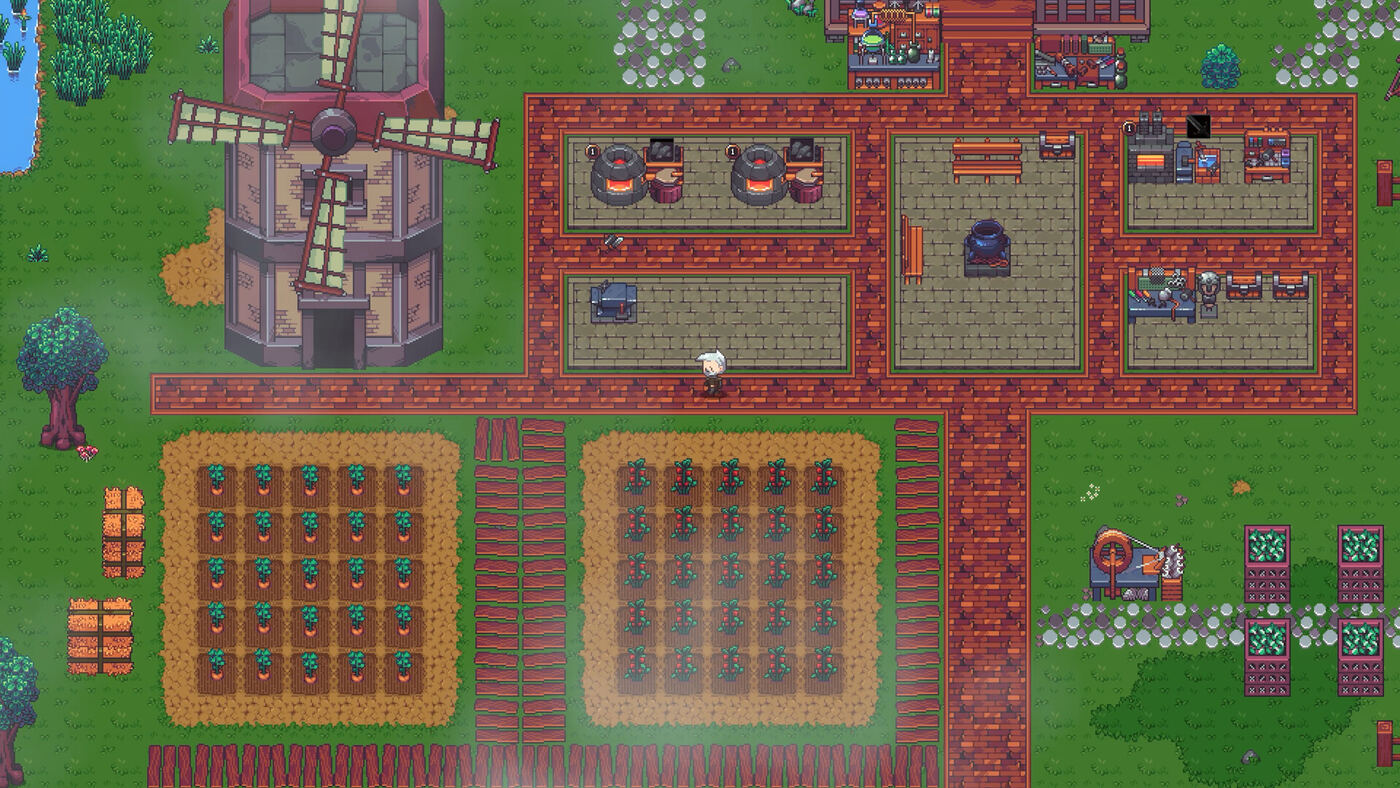
Every resident is a system
The design decision that separates this from a cosmetic hub is that residents are not decoration. Each one is attached to a function:
- A trade. Residents teach skills, which is one of the ways a character grows beyond what combat experience alone provides.
- A shop. Stock expands what you can carry into the dungeon without crafting it yourself.
- A quest line. Residents hand out work that sends you to specific parts of the prison.
Because those three things are bound to individuals, the order in which you rescue people shapes the run. A player who frees a crafter early has a different first ten hours from one who frees someone with a quest that opens a route down. Neither is wrong; the town simply becomes a different town.
Reading the diaries
Emberville lets you read the diaries of the people living in it. The diaries are where the town's character comes from — they carry the residents' own accounts of the prison, of the surface, and of what the rebuild has changed for them.
They also do narrative work that the main plot cannot: a resident's diary tells you what a place was like before you arrived, which is the only way to see the damage the Vitromotus did to ordinary lives. Reading them is optional. The town still functions if you never open one, and it is considerably less legible.
Mechanics unlock with the rebuild
Rebuilding is not only about shops opening. Systems arrive as the town grows — crafting, gathering, the estate, and the daily rhythm of a populated settlement all come online as part of the rebuild rather than sitting in a menu from minute one.
That pacing is deliberate. The first hours are a dungeon and a ruin, and the game withholds the management layer until there are people to manage. By the time the town is a hub, the player has already learned the corridors that supply it.
A living hub, shaped by what you did
Cygnus Cross describes Emberville as a living hub, and the phrase is accurate in a specific sense: the settlement's final form is a consequence of player behaviour rather than a fixed sequence of upgrades. Who you rescued, which trades you learned, and which quests you followed all leave a mark on what the place contains.
That has a practical edge. A town built around crafting sends you back into the dungeon for materials. A town built around quests sends you deeper for story. The same settlement supports both, and the emphasis is yours to set.
Day, night and the clock
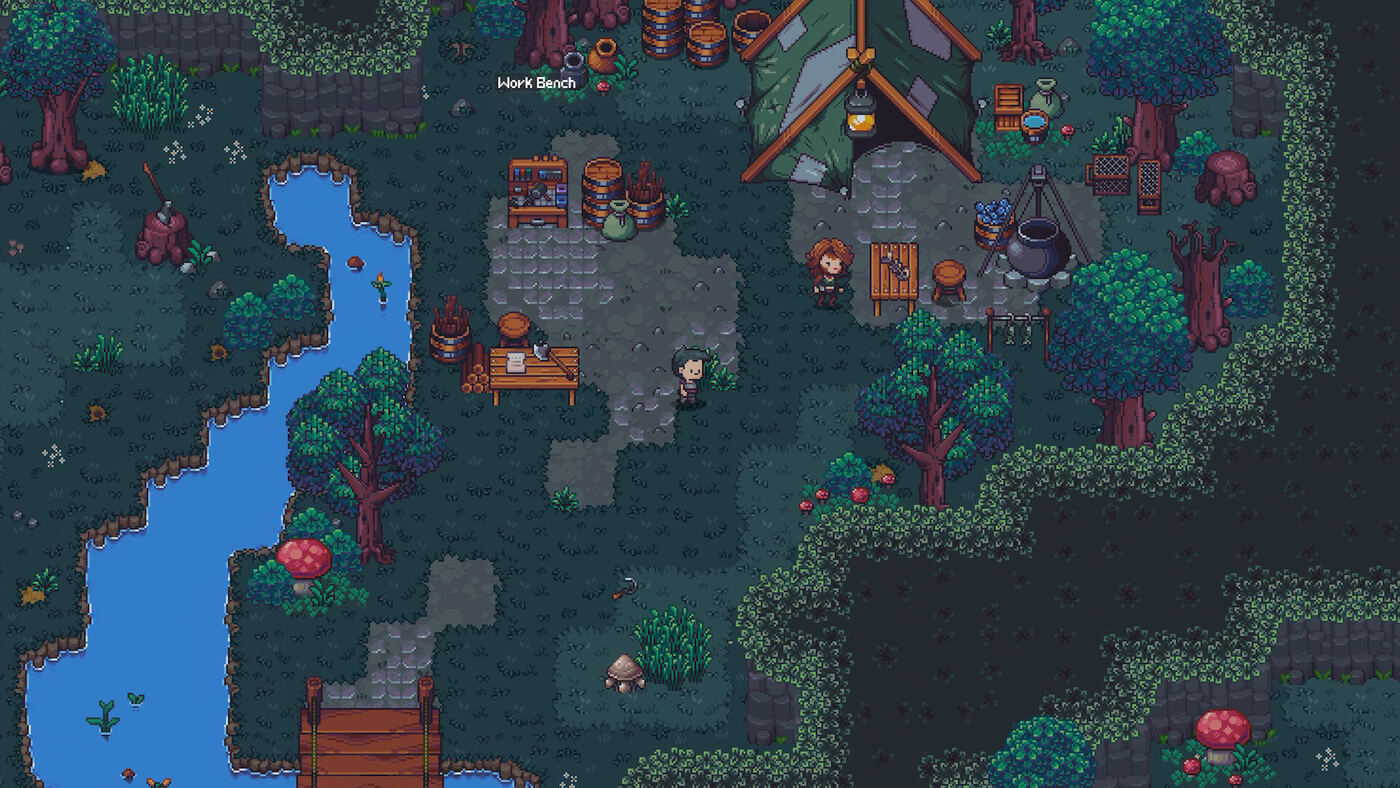
The town runs on a day cycle, and the clock in the corner of the screen is the clearest evidence of it: the UI has been shown reading DAY 2, 7:30 PM on a night with lit windows, and DAY 4, 10:30 AM over fields in full daylight. Days are numbered, hours advance, and the town looks different depending on when you walk through it.
What that rhythm governs is straightforward: the town is where you return between descents, and the clock tells you how much of the current day the last trip cost. Night and morning are visibly different places — lamps and lit windows against tilled ground and open sky — which makes the return leg of the loop legible at a glance.
Where the town meets the rest of the game
Three systems feed the rebuild and are fed by it. Combat supplies the survivors and clears the routes. Crafting and the estate convert dungeon materials into things the town and the character both use. The Vitromotus is the source of everything above ground, including the people.
A player who ignores the town can still fight. A player who invests in it fights with better tools, more skills and a shorter trip between attempts — which, in a game where death sends you back rather than ending you, is the resource that compounds.
Next step
- Emberville Crafting and Estate: Gear, Potions, HomesteadEmberville crafting turns dungeon materials into gear, potions, food and tools, while the estate lets you raise buildings, furniture, plants and decoration.
- Emberville Vitromotus: The Prison Where Kymia RevivesThe Emberville Vitromotus is a magical prison for a society's unwanted, kept alive by kymia, the emotion-born energy that reshapes its biomes and its monsters.
- Crafting and estateGathering, professions and the homestead you build from dungeon materials.