
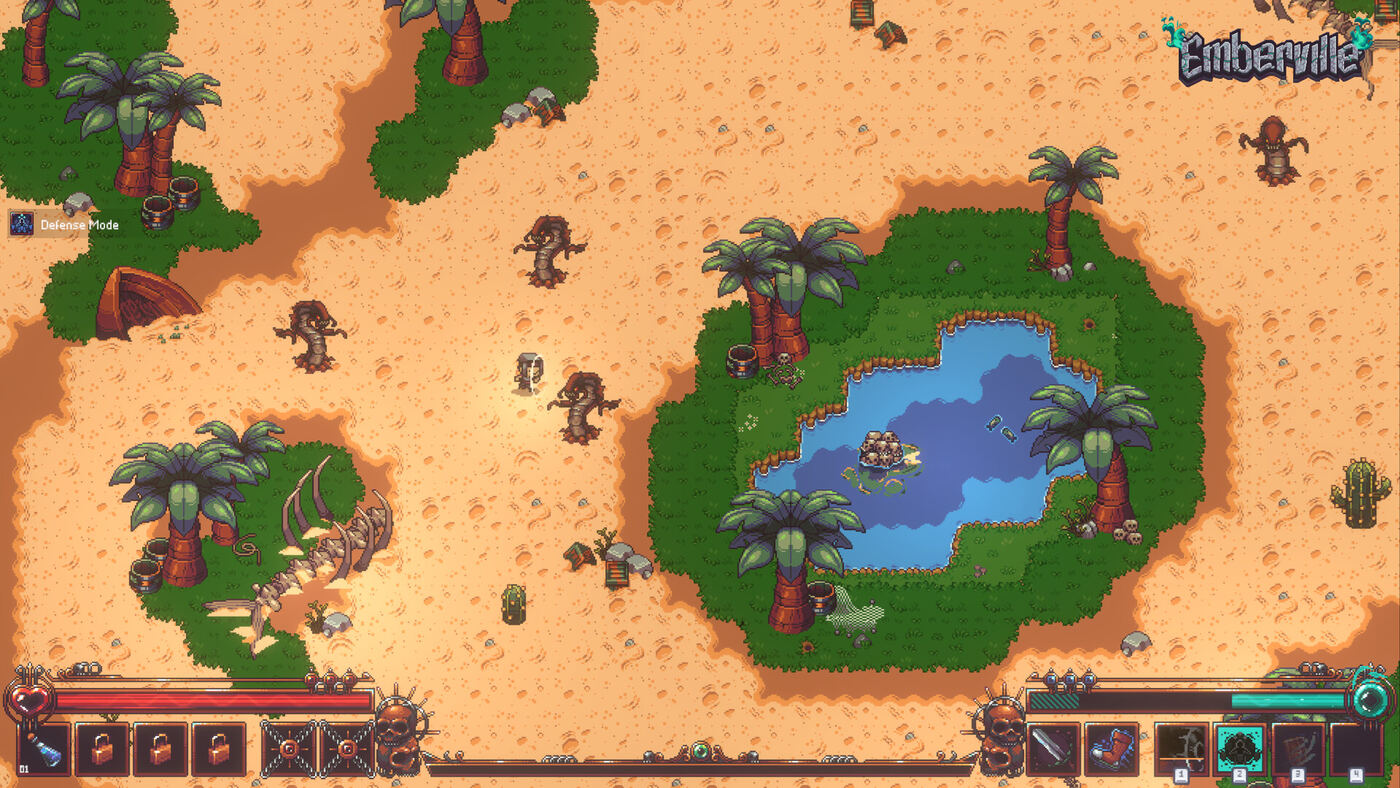
The official estimate for Emberville is 15 to 20 hours for an average playthrough, with 7 to 10 hours for a run that pushes straight through the story and 20 to 30+ hours for one that stops to craft, build and explore. Those are Cygnus Cross's own figures for the Early Access build, given before launch and framed as estimates rather than measurements.
The prologue is the one piece with a tighter number attached: about 90 minutes of story, characters and core mechanics, which is also the length of the free demo.
The three estimates, side by side
| Playstyle | Official estimate | What it describes |
|---|---|---|
| Story only, minimum detours | 7–10 hours | Main line through the first biome, little else |
| Average run | 15–20 hours | Story plus town, side content and some crafting |
| Thorough run | 20–30+ hours | Crafting, building the estate, exploration, repeat visits |
The ranges are not three difficulty settings — they describe three different relationships with the same build. The middle one is the number to plan around, because it is the one the studio expects most players to land on.
Where the 90-minute prologue sits
Ninety minutes is short for a chapter that has to introduce a world, a cast, a town and a combat system, and it is deliberately so: the prologue is a tutorial wearing a story, and the demo proved it can be finished in a single sitting.
It is also roughly 5 to 10 percent of an average run. That ratio is the useful part. A game whose opening chapter is 90 minutes and whose average completion is 15 to 20 hours is not front-loading its content — it is spreading it across a town that grows, a biome that expands and systems that keep unlocking after the story has moved on.
What separates a 7-hour run from a 30-hour one
The short answer is the town and the estate. Cygnus Cross lists five content pillars for the launch build: story and exploration, combat and character growth, town rebuilding, crafting and building, and voiced characters. A player who follows the story touches the first and second and brushes the rest. A player who rescues every survivor, learns every trade and furnishes the estate is spending time in three systems that have no fixed end point.
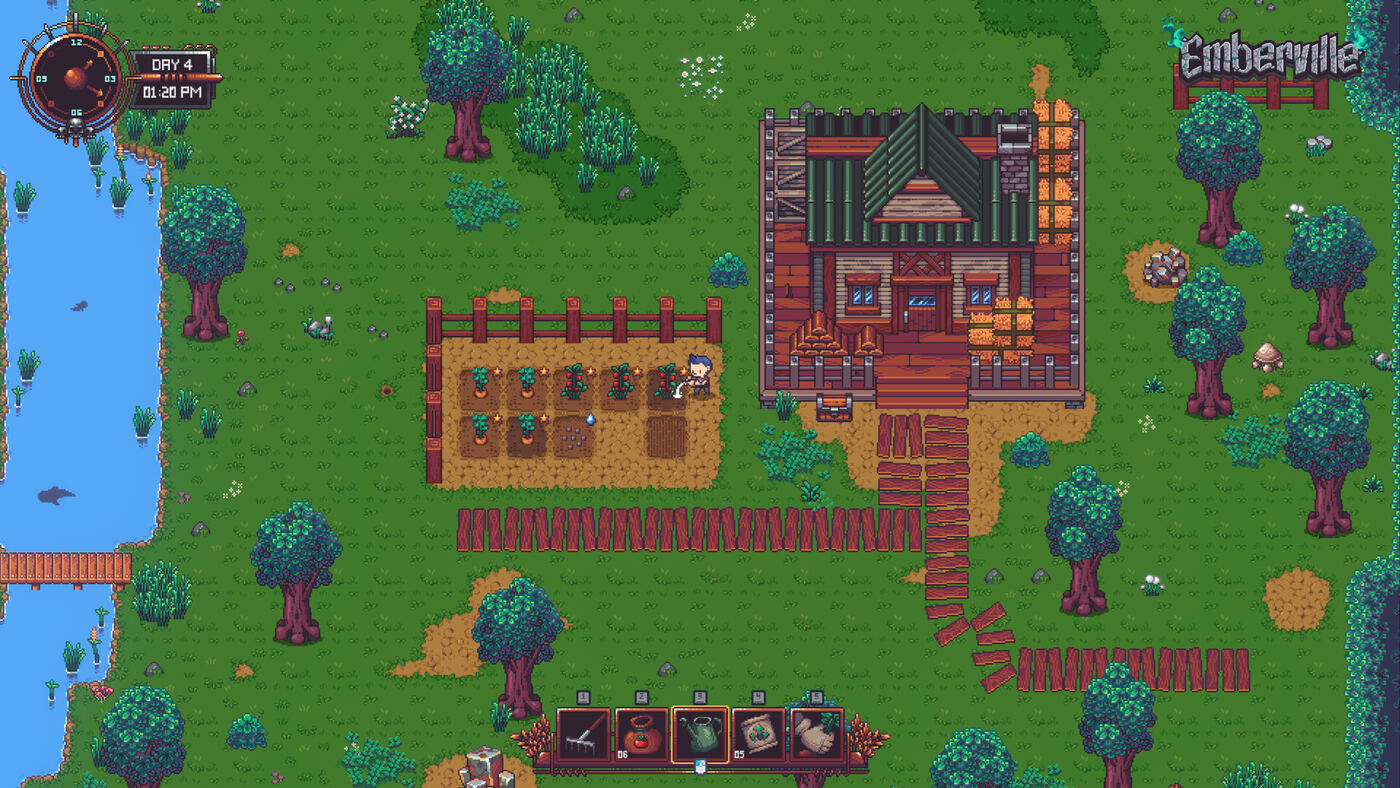
Crafting in Emberville covers potions, food, tools, accessories and gear, and the estate takes buildings, furniture, plants and decoration. None of that is required to finish the story. All of it is required to finish the game in the sense a 30-hour player means it.
There is a second multiplier: classes swap at any time and inherit skills across one another. A player who treats the class system as a build laboratory will replay the same content in different shapes, which is the cheapest way for a game of this size to double its own length without adding a single room. The class system is where that time goes.
The 180-minute voice track, as a density check
The build ships with 180 minutes of recorded dialogue, in English and Brazilian Portuguese, from a cast of 22 actors. Two hours of speech against a 15-to-20-hour run is an unusual ratio for a pixel RPG — most games in this style keep voice for the opening and the bosses.
It is a rough proxy for how much scripted material sits outside the critical path. Two hours of audio does not fit into a 7-hour run without most of it going unheard, which is one reason the average estimate is nearly double the rushed one.
Why the top of the range has no ceiling
The estimate ends in "30+" rather than a number, and the build explains why. Early Access opens with the first biome of a planned nine, and the town keeps absorbing residents as you rescue them. More biomes and more residents mean more side content per run, so a figure that is accurate on January 7 will read low by the time the ninth biome arrives.
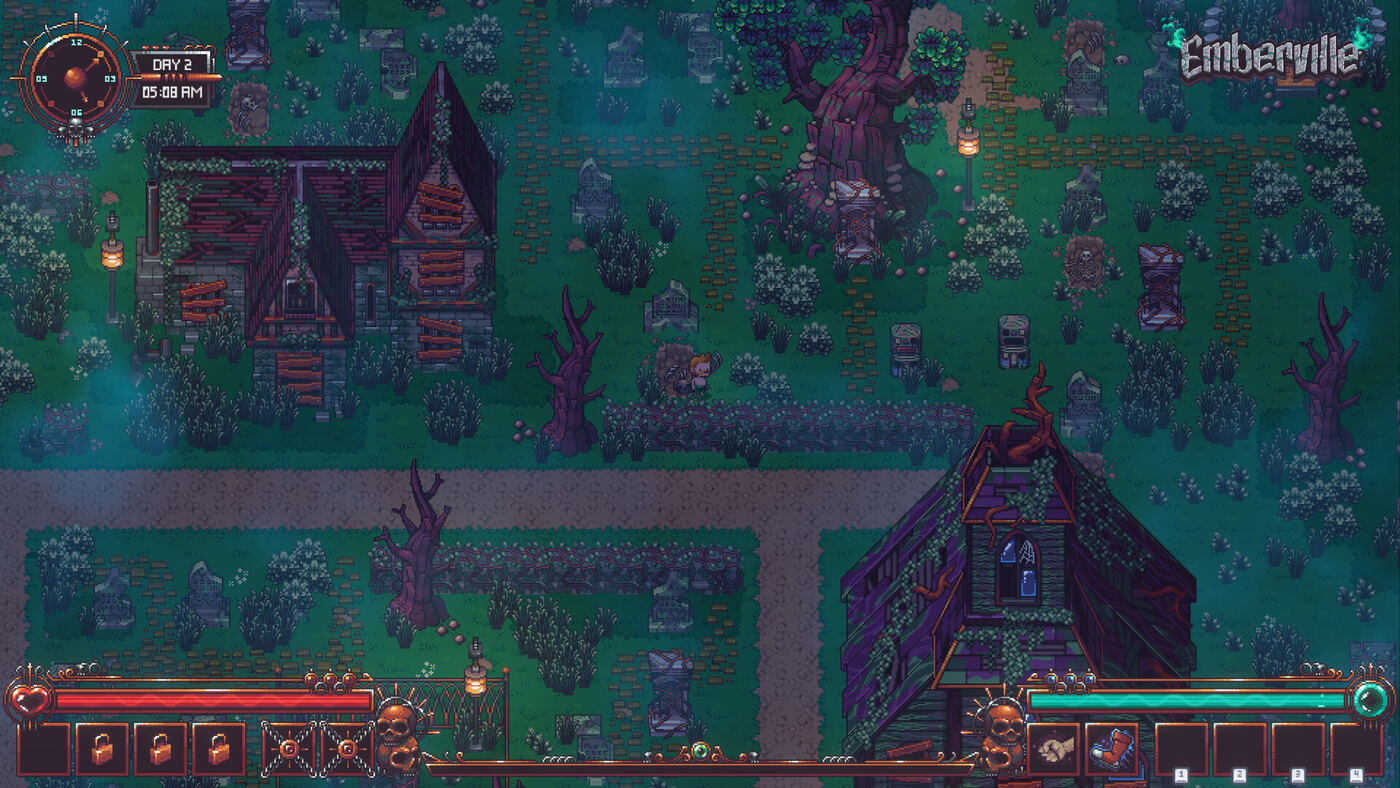
The floor of the range is more stable. A story-only run is bounded by the main line, and the main line is what it is on launch day. If 7 to 10 hours sounds short, that is the number for skipping the town — and the town is the part the studio keeps calling the heart of the game.
Planning around the estimate
For a first run, 15 to 20 hours is the honest planning figure, and it assumes you engage with the town without trying to exhaust it. Add the crafting and estate loop and the ceiling moves past 30. Subtract the town entirely and you are looking at a week of evenings.
Emberville runs a day cycle over the town, and a run that waits for the right hour of the day — for a shop, a resident, a conversation — spends time that a story-only run never touches. None of that time is compulsory. All of it counts toward the total.
The one thing the estimate cannot tell you is pacing — whether hour eight feels like progress or like a grind. That answer arrives with the build on January 7, and the Early Access plan sets out what the first month adds on top of it.
Next step
- Emberville Demo: Prologue Save Carries Into Early AccessThe Emberville demo has been live since October 19, 2026: about 90 minutes of Prologue, a free standalone download, and a save that carries into Early Access.
- Emberville Early Access: Nine Biomes, One at LaunchEmberville early access opens January 7, 2027 with the first of nine biomes, five content blocks on day one, and co-op, mods and consoles held for 1.0.
- ClassesSwap at any time, inherit skills across classes, build around a weapon.