
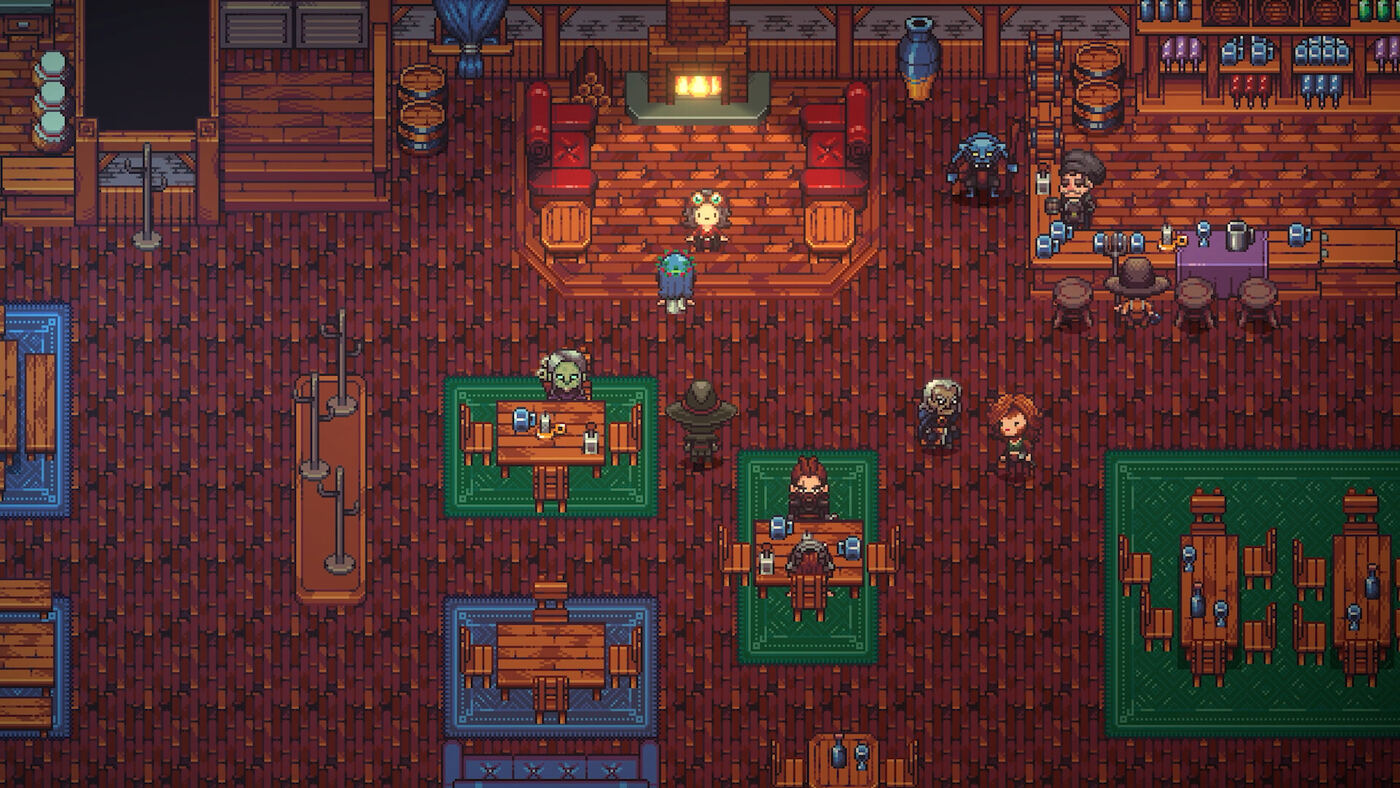
Emberville is single-player when it launches on January 7, 2027. Co-op multiplayer is planned for 1.0, the milestone after Early Access, and no version of the game in January lets a second player join. There is also no split-screen — local co-op has never been part of the plan.
That combination catches two different groups. Players who assumed a top-down action RPG in 2027 would ship with drop-in co-op find a solo game. Players searching for couch co-op find a game with no shared-screen mode at all.
The sentence the studio wrote
The FAQ answer is short enough to quote whole:
"Yes! Co-op multiplayer is planned for the 1.0 release. Early Access launches as a single-player experience."
Both halves matter. The first is a commitment to co-op as a 1.0 feature, not a maybe. The second is a plain statement that the January build has no multiplayer path of any kind — no invite, no lobby, no shared world to be dropped into.
It also places co-op on the far side of the nine-biome plan. Early Access begins in the first biome and expands toward nine, and 1.0 is where that expansion and the multiplayer layer are meant to meet.
What the store tags confirm
Emberville carries a Single-player tag. It does not carry Online Co-op, Local Co-op, Online PvP or Multiplayer tags, and the store's feature list does not mention playing with anyone else.
Store tags are a blunt instrument, but in this case they agree with the FAQ, the announcements and the launch content list — five blocks of single-player content, none of them social. When the launch build is described, the description has one player in it.
The tags also describe shape rather than timing. A game with co-op planned but not built carries the tags it currently earns, not the ones it will earn by 1.0 — which is why the Single-player label is the accurate one to read today.
No split-screen, and why that is a real gap
Local and split-screen co-op has never been part of what the studio describes. The co-op in the plan sits in the 1.0 feature list next to mod support and console versions — features that extend the game rather than change how a single screen is used.
What that means practically: a household with one PC and two people who want to play together has no option, and will not have one in January. Co-op arriving at 1.0 does not change that, since shared-screen play is not one of the three features 1.0 is built around.
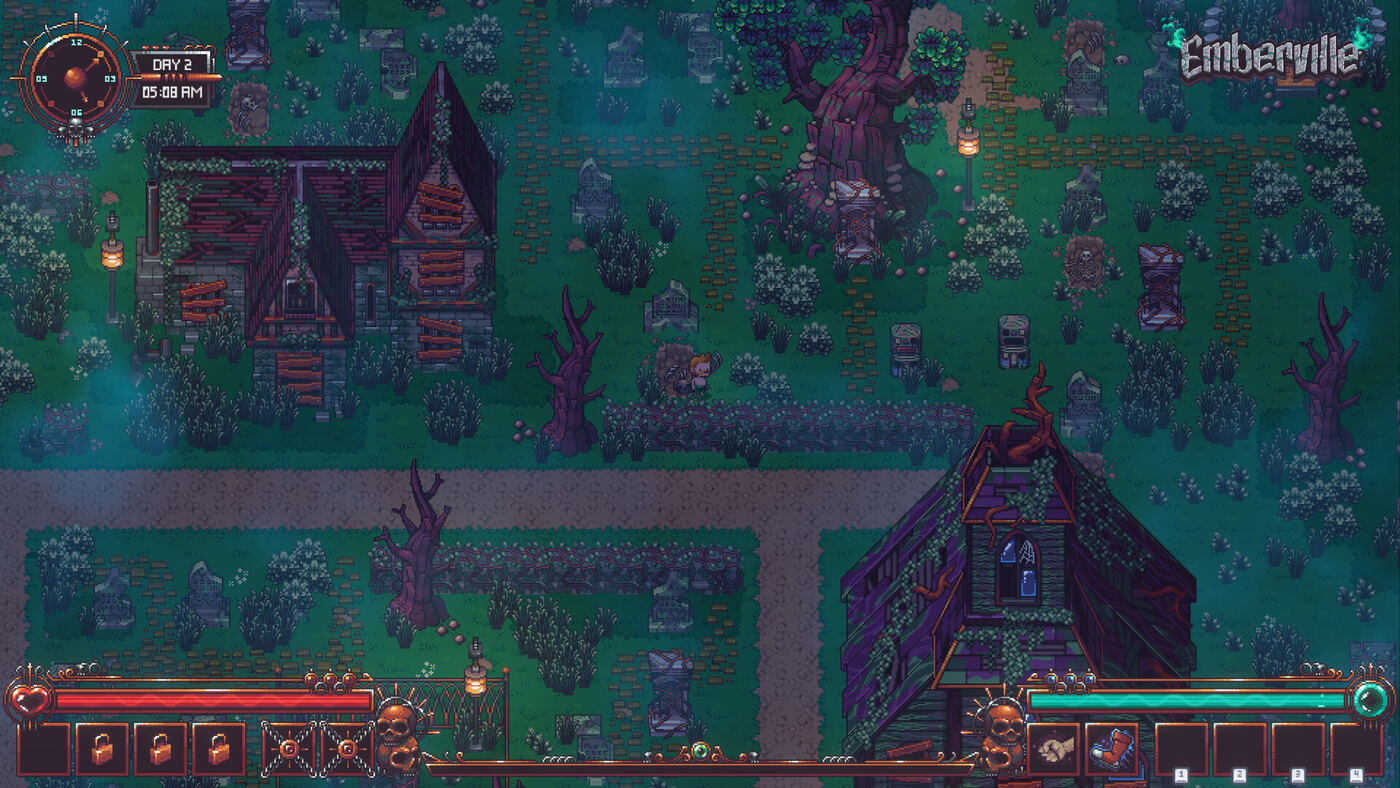
What single-player is doing with the space
The absence of co-op is easier to accept once the launch build's actual structure is clear, because the loop is built on consequences that belong to one person.
Survivors are rescued in the world and move into Emberville. Each brings a trade, a quest line and something to read, and the town's shape follows who was brought back and in what order. Classes swap freely and inherit each other's skills, so a build is assembled rather than chosen at a menu. The estate — buildings, furniture, plants, decoration — is yours to furnish, and the crafting layer feeds it.
None of that is co-op-shaped. A shared town would need a shared answer to whose survivors moved in and whose estate got built, and that is exactly the kind of design question a 1.0 feature has to solve rather than inherit.
Length fits the same pattern: the studio's estimate is 15–20 hours for an average Early Access run, 7–10 for a story rush and 20–30 or more with crafting and building. That is a solo campaign's shape, not a session game's.
When co-op actually arrives
Co-op is one of three features attached to 1.0, with mod support and console versions. That grouping is the useful detail: co-op does not get its own release, it ships inside a milestone that also has to deliver modding tools and a console port.
The order after launch looks like this:
| When | What changes |
|---|---|
| 2027-01-07 | Early Access opens, single-player, first biome |
| First month | Final boss of Biome 1, controller work, languages, fixes and roadmap |
| 1.0 | Co-op, mod support, console versions |
Between the first month and 1.0, the roadmap is the document that will say more. Until it exists, co-op's date is 1.0's date, and 1.0's date is not on a calendar.
Co-op has no price attached to it
The multiplayer build is not a separate product and not a paid expansion. Emberville is sold once at $29.99, and 1.0 arrives as an update to that purchase — no season pass, no subscription, no paid DLC. A January buyer gets co-op when it ships, at no further cost.
That also means there is no co-op edition to watch for and no separate tier that bundles it. The only number in the decision is the price of the game, and the only question is whether to pay it before co-op exists or after.
Playing in January without it
The single-player build is the game, not a waiting room. The Prologue demo covers the opening chapter in about ninety minutes, carries its save into Early Access, and costs nothing — so the reasonable path for anyone unsure about buying a solo game at $29.99 is to play that first and decide from it.
Anyone who only wants to play with friends should wait, and should wait knowing what the wait costs: a game that arrives with nine biomes and co-op at the same time, versus one biome and no company in January. The Early Access plan lists everything in between, and the platform page covers which systems any of it runs on.
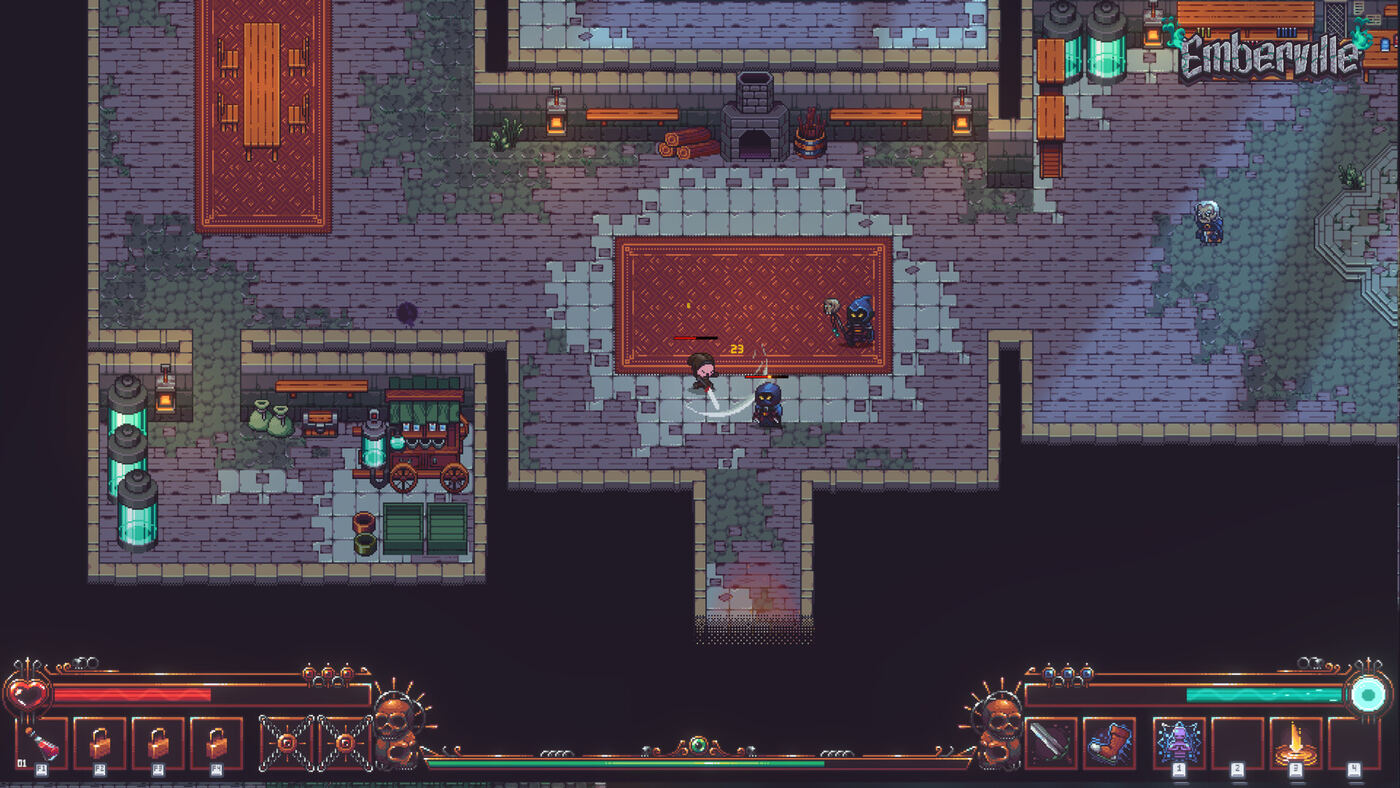
The short answer
One player at launch. Co-op at 1.0. No split-screen at any point in the plan. Nine biomes and a rebuilt town to fill alone in the meantime, with a free ninety-minute Prologue to test the whole thing before paying for it.
Next step
- Emberville PS5 and Console Versions Wait for 1.0No Emberville PS5 build exists yet: Early Access is Windows PC only, with no Mac or Linux version. Console ports are part of the 1.0 plan and carry no date.
- Emberville Early Access: Nine Biomes, One at LaunchEmberville early access opens January 7, 2027 with the first of nine biomes, five content blocks on day one, and co-op, mods and consoles held for 1.0.
- Voice Cast22 actors announced in July 2026, and whose work ships in January.