
Emberville lets you change class at any time, and skills learned in one class carry into the next — both passives and actives. There is no locked role and no permanent choice: a class is the moveset you are holding at the moment, and the build is the accumulated set of skills behind it.
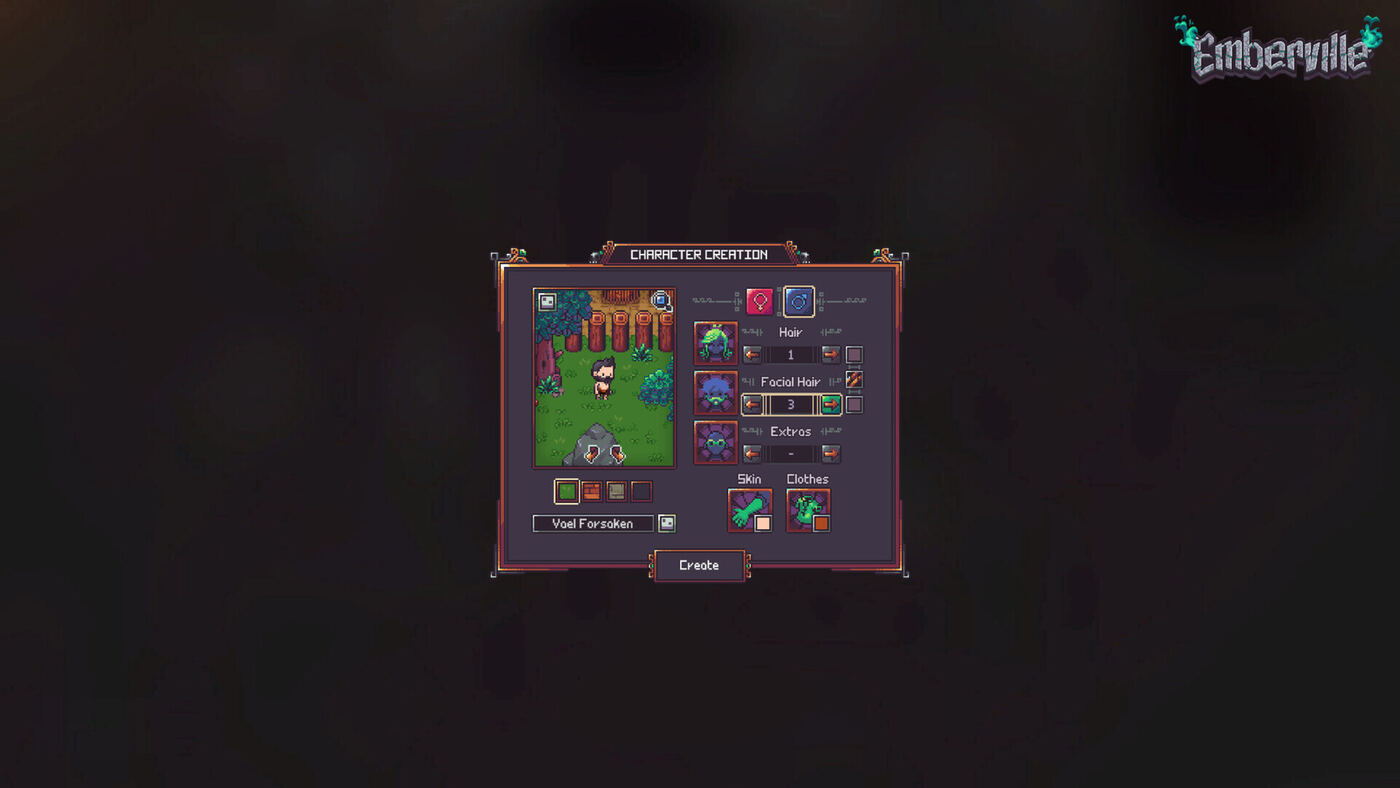
The class itself is chosen during character creation, alongside appearance and a name, which makes that screen the first and least binding decision in the game.
What a class actually changes
Cygnus Cross describes a big range of combat classes, each with its own playstyle and its own abilities. That is the whole of the public description, and it is enough to establish the shape: classes differ in how they fight, not in what content they can access.
The consequence is that a class choice carries none of the usual penalties. No class is gated behind a story beat, no class is wasted by picking the wrong one at hour zero, and no run is defined by a screen you saw once at the start. What a class gives you is a set of tools for the next few hours.
Why inheritance is the real system
Swapping alone would make classes interchangeable, a cosmetic menu of playstyles. What turns it into a build system is inheritance: passive and active skills learned under one class remain available under another.
That inverts the usual question. In a game with locked classes, you ask which class is strongest. Here the question is which combination of inherited skills covers the most situations, and the class you are currently wearing is one slot in that answer rather than the answer itself.
It also means early investment is never stranded. A player who spends the first five hours in one class and then switches has lost the class ability, not the skills — the accumulated passives travel, and the actives travel with them.
The weapon decides the combo
Combos in Emberville are bound to weapons. Different weapons carry separate combo trees, and a string can chain different types of attack together rather than repeating one input.
This is the part of the system that changes most when you swap. Two classes holding the same weapon share the combo tree; one class holding two different weapons does not. Practically, the weapon in hand sets the rhythm of a fight — reach, timing, how many hits land before the string resets — while the class and inherited skills set what happens around that rhythm.
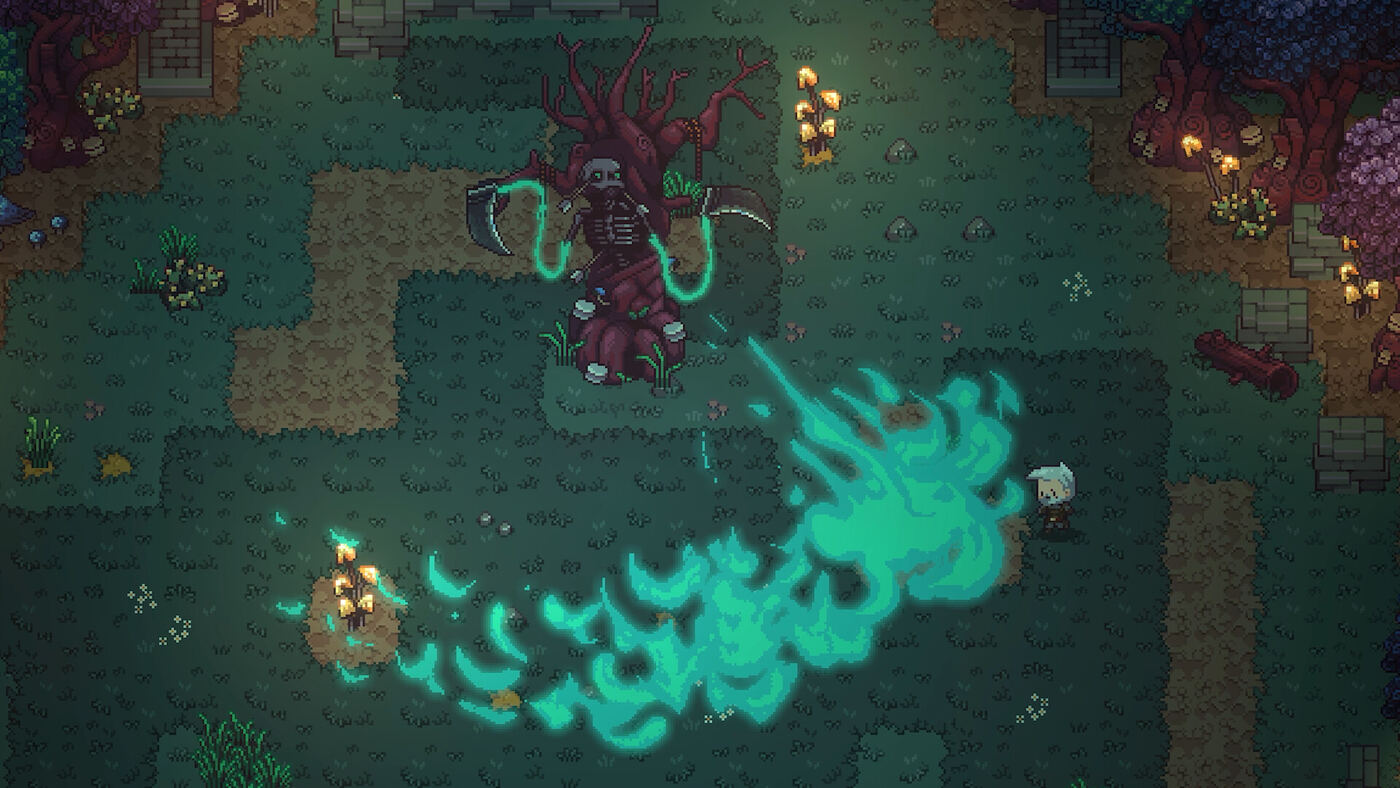
The pairing is why the combat system talks about positioning and timing rather than rotations. A combo tree is a physical sequence with a shape, and the counterplay is movement.
The six attributes
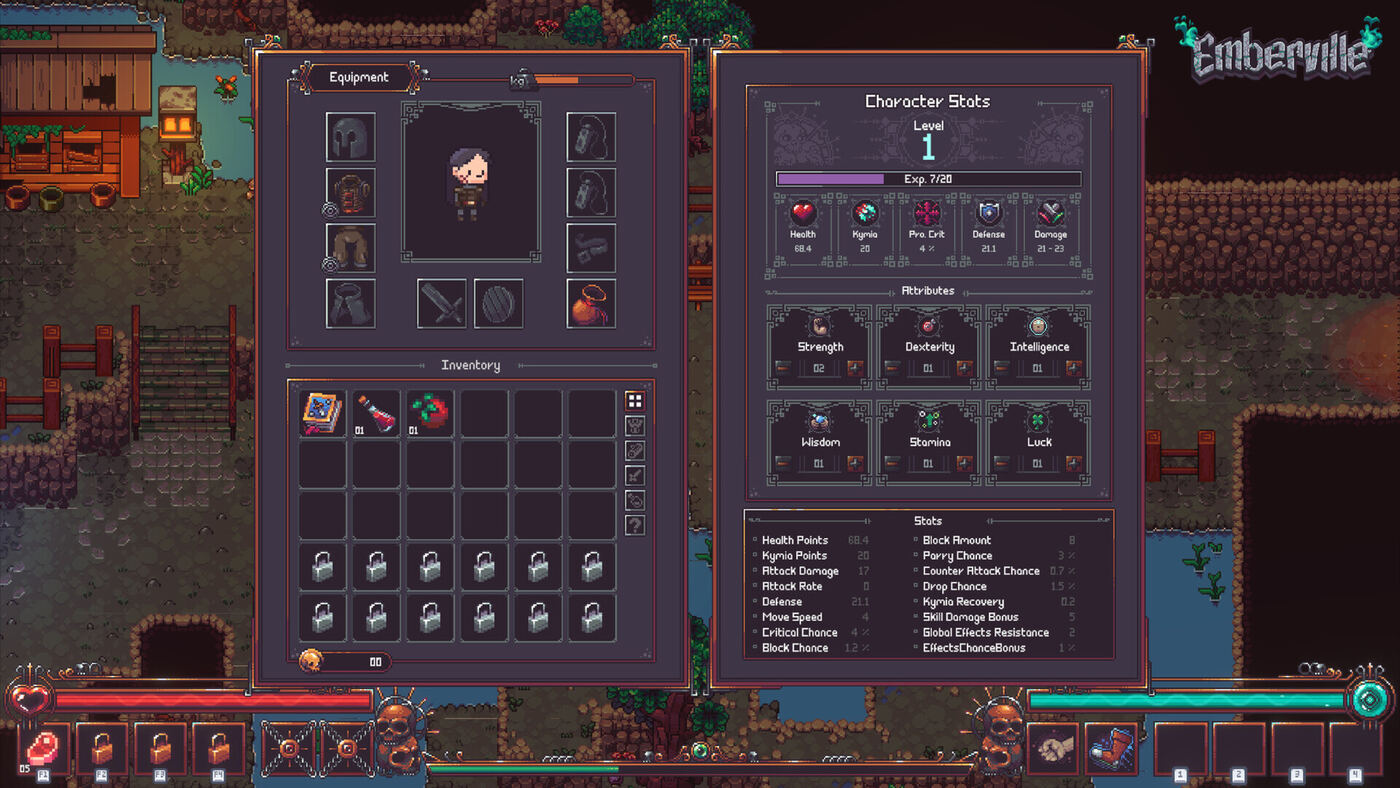
Character growth runs on six attributes, all visible on the panel:
- Strength
- Dexterity
- Intelligence
- Wisdom
- Stamina
- Luck
Six is a small enough number to hold in your head and wide enough that no single build covers all of them. Because skills carry across classes, the attributes and the stats below them are the only fixed frame a build has — everything else is swappable inventory.
The sixteen stats in the panel
Below the attributes, the character sheet lists sixteen derived stats. They are the numbers the game actually resolves combat with:
| Stat | What it covers |
|---|---|
| Health Points | Size of the health pool |
| Kymia Points | Size of the Kymia pool |
| Attack Damage | Damage per hit |
| Attack Rate | How often attacks come out |
| Defense | Damage reduction |
| Move Speed | Movement rate |
| Critical Chance | Odds of a critical hit |
| Block Chance | Odds a block registers |
| Block Amount | Damage a block absorbs |
| Parry Chance | Odds a parry registers |
| Counter Attack Chance | Odds a counter follows a defence |
| Drop Chance | Odds of a drop |
| Kymia Recovery | How quickly Kymia refills |
| Skill Damage Bonus | Extra damage on skills |
| Global Effects Resistance | Resistance to effects generally |
| Effects Chance Bonus | Extra odds on effects |
Read as a set, the list says what kind of game this is. Four of the sixteen raise damage output, six reduce or deflect incoming damage, and the remaining six are pools, movement, drops and effect modifiers — a spread that puts as much weight on surviving a trade as on winning it.
Kymia is the second bar
Health is not the only pool. The panel carries a second resource called Kymia, drawn as its own bar beside health, with Kymia Points and Kymia Recovery as separate stats.
Kymia is the energy that gives the setting its premise: in Vitromotus it is generated by emotion, and it is what lets the imprisoned dead rise again. In combat it functions as the resource that skills draw on, which is why Skill Damage Bonus and Kymia Recovery sit in the same list as Attack Damage.
Parry, Counter Attack, Block
Three defensive options appear by name on the panel, each with its own stat: Parry, Counter Attack and Block. Block has both a chance and an amount — it can fail, and when it lands it absorbs a fixed quantity. Parry and Counter Attack are chance-based entries with no amount beside them.
That trio is the reason the class system does not need to be balanced around damage alone. A build can lean into absorbing hits, into turning a defence into an attack, or into avoiding the exchange entirely, and the stats will show which one it is doing.
Where the levels come from
Progress arrives from three directions: combat experience, items, and instruction from the survivors you bring back to Emberville. The third is the unusual one — rescued residents teach, which ties character growth to the town rather than to the dungeon alone.
That closes the loop the whole game is built on. You go into the dungeon to bring people out, the people you bring out make you stronger, and the strength you gain is spent going deeper. No part of that loop depends on keeping the class you started with.
Next step
- Emberville Combat: Weapon Combos, Parry Windows, BossesEmberville combat runs on positioning and timing: weapon-bound combo trees, parry and block resolved in real time, and boss fights with their own health bar.
- Emberville Crafting and Estate: Gear, Potions, HomesteadEmberville crafting turns dungeon materials into gear, potions, food and tools, while the estate lets you raise buildings, furniture, plants and decoration.
- CombatPositioning, weapon combos, boss patterns and the difficulty setting.